

Best overall business plan template: a full plan with linked financial forecasts. Best for testing an idea: a lean plan. Best for a funding application: a lender-ready plan. This 2026 guide compares five template formats for Ghanaian startups, so you can choose the structure that supports your next decision rather than the most attractive document.
- The best overall business plan template combines a written plan with financial forecasts you can update.
- Choose a lean business plan for idea validation, not as a substitute for a lender’s requirements.
- Skillspad sells digital business templates for Ghanaian businesses; check each template’s scope before choosing.
- Use Ghana cedis consistently, separate cash from profit, and label every forecast assumption.
Why this matters
A business plan should help you make a decision: launch, change your offer, apply for funding, or organise delivery. Those decisions need different information. A document that suits an investor presentation does not automatically give you a useful operating plan.
Skillspad serves Ghanaian businesses looking for digital business templates. When choosing a business plan template, judge the actual sections and editable files against your purpose; do not assume that a business-template package includes financial forecasting.
For a Ghanaian startup planning in 2026, local relevance starts with your own customers, costs and payment arrangements. A Ghana-focused title cannot replace those details. Your plan needs to describe the business you will actually run.
What makes the best business plan template?
Use these criteria before choosing a format:
- Decision fit: The structure answers the question you need to resolve, whether that is demand, funding or daily operations.
- Financial connection: Sales assumptions feed into costs, profit and cash forecasts instead of sitting in unrelated documents.
- Ghana relevance: Currency, customer segments, routes to market and payment terms reflect your business in Ghana.
- Editable structure: You can change headings, formulas and assumptions without rebuilding the whole plan.
- Evidence separation: The template distinguishes confirmed information from estimates and unresolved questions.
- Update value: You can compare actual results with the plan after launch, rather than filing it away.
Choose the format that exposes your biggest uncertainty. If demand is untested, start with validation. If customers already buy but cash runs short, focus on collection timing and operating costs.
Business plan templates at a glance
These rankings compare template formats, not named products. Each format has a different job; check the contents of any downloadable file against the structure described here.
| Rank and format | Best for | Standout feature | Key limitation |
|---|---|---|---|
| 1. Full plan with financial forecasts | Building a complete launch plan | Connects the business narrative to financial assumptions | Takes more work to maintain |
| 2. Lean business plan | Testing an early idea | Makes assumptions and validation tasks visible | Does not provide detailed funding documentation |
| 3. Lender-ready business plan | Preparing a borrowing application | Centres the funding purpose and repayment logic | Must match the particular lender’s requirements |
| 4. Operations-led business plan | Organising an early trading business | Connects sales, fulfilment and cash collection | Gives less space to the investment narrative |
| 5. Pitch-linked business plan | Preparing investor conversations | Connects a short presentation to supporting detail | A persuasive pitch can conceal weak assumptions |
1. Full plan: best business plan template for launch planning
A full business plan explains your offer, customers, competitors, sales approach, operations and finances. The strongest version connects the written assumptions to an editable financial workbook. Change the expected sales volume, and the financial consequences should be visible.
Best for: a Ghanaian founder who needs a complete launch plan. This is the default choice when you must assess several connected questions rather than test one isolated idea.
What to look for
Choose sections for the customer problem, offer, market evidence, sales process, delivery arrangements and financial assumptions. Build a monthly forecast covering 12 months so you can examine the timing of receipts and payments, not just an annual total.
For your 2026 plan, distinguish launch expenses from recurring operating expenses. State whether sales figures include unpaid customer invoices; a sale and a cash receipt are not the same event.
Full plan pros:
- Brings commercial, operational and financial decisions together.
- Makes contradictions between sales ambitions and delivery capacity easier to spot.
- Provides a reference you can update after launch.
Full plan cons:
- Requires more preparation than a short validation document.
- Becomes misleading when the narrative changes but the financial assumptions do not.
Verdict: Buy this format for a complete launch plan; skip decorative documents with no usable financial structure.
2. Lean plan: best business plan template for idea validation
A lean business plan summarises the customer, problem, offer, sales route, main costs and assumptions. Its purpose is to make an idea testable before you write a long document. The useful output is a clearer next experiment, not a polished description of an unproven business.
Best for: a founder who has an idea but needs evidence of demand. Use a 1-page working summary to keep the first draft focused.
What to look for
Choose a format that separates assumptions from evidence. Include space for customer feedback, buying objections, alternatives customers already use and the next test you will conduct.
For example, replace a broad target such as small businesses in Ghana with a customer group you can actually reach. Describe the problem those buyers face and the action that would demonstrate interest. Do not treat compliments as proof that people will purchase.
Lean plan pros:
- Keeps attention on the customer problem rather than document length.
- Makes unsupported assumptions easier to identify.
- Lets you revise the offer without rewriting a full plan.
Lean plan cons:
- Provides little detail on cash requirements or delivery capacity.
- Does not replace the documents a funding provider requests.
Verdict: Buy this format for validation; wait on a full plan until you know what needs testing.
3. Lender-ready plan: best business plan template for borrowing
A lender-ready business plan explains what you need funding for and how the business expects to repay it. It should connect the funding request to specific uses, operating assumptions and cash forecasts. The lender’s application requirements remain the starting point.
Best for: a founder preparing a business borrowing application. Use this format when repayment is the central question, rather than treating it as a general-purpose presentation.
What to look for
Include the funding purpose, owner contribution where relevant, use of funds, sales assumptions, operating expenses and repayment cash flow. Keep supporting evidence organised so the written claims can be checked.
Before preparing a 2026 application, ask the lender for its current document requirements. Use the actual financing terms provided for your application; do not copy sample repayment figures from a template.
Test 3 scenarios: base, lower sales and delayed collections. These are planning exercises, not predictions. Their purpose is to show which assumptions determine your ability to repay.
Lender-ready plan pros:
- Connects the funding request to a defined business purpose.
- Keeps cash available for repayment in view.
- Helps organise the evidence behind financial assumptions.
Lender-ready plan cons:
- Cannot substitute for lender-specific forms or supporting documents.
- Becomes unreliable when repayment terms or sales assumptions are copied from examples.
Verdict: Buy this format only after checking the lender’s requirements; skip claims that a template guarantees approval.
4. Operations-led plan: best business plan template for daily control
An operations-led business plan turns the business idea into a working process. It explains how an order becomes a delivery, who completes each task and when payment is collected. This format is useful when the main problem is execution rather than describing the opportunity.
Best for: an early trading business that needs clearer responsibilities and records. Choose it when orders, expenses and delivery commitments need to fit together.
What to look for
Organise the plan around Sales, Fulfilment, Collections and Review. Under each heading, define the responsible person, the record they maintain and the decision that record supports.
Keep order records distinct from payment records. An accepted order does not prove that payment has arrived, and a completed delivery does not prove that the sale was profitable.
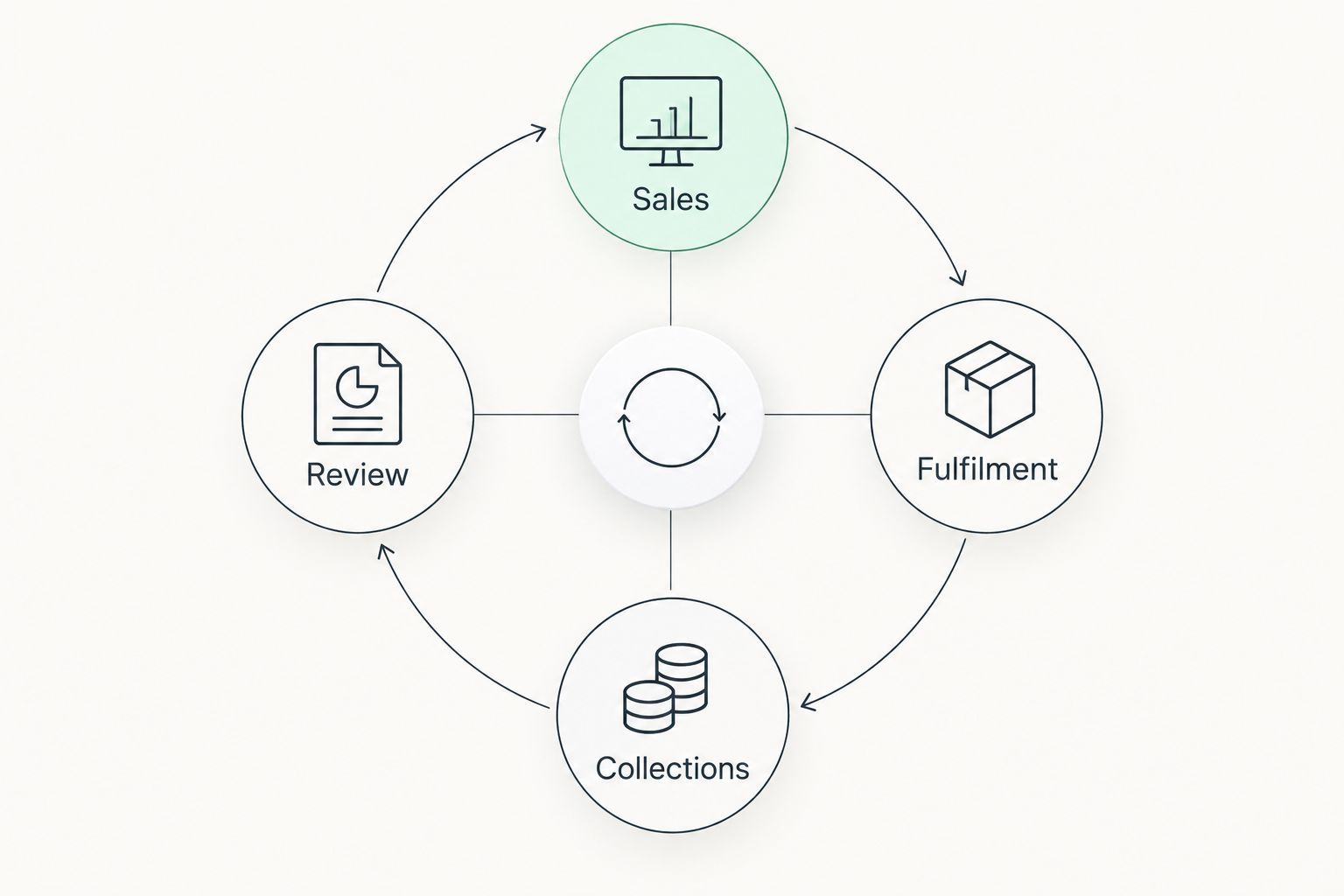
For 2026 operations, define how you will compare actual sales and expenses with the plan. Use records that support decisions; avoid collecting information nobody reviews.
Operations-led plan pros:
- Connects the plan to everyday work.
- Clarifies ownership of orders, deliveries and payment follow-up.
- Makes it easier to compare planned activity with actual results.
Operations-led plan cons:
- Gives less detail on the wider market or investment case.
- Requires consistent record-keeping to remain useful.
Verdict: Buy this format when execution is the bottleneck; wait on a presentation-focused plan until the operating process is clear.
5. Pitch-linked plan: best business plan template for investor preparation
A pitch-linked business plan pairs a short presentation with a more detailed written explanation and financial model. The presentation introduces the opportunity; the supporting plan explains how the business works. Both documents should use the same assumptions.
Best for: a founder preparing investor conversations. Choose this format when you need to explain the business clearly and answer follow-up questions with supporting detail.
What to look for
Include the customer problem, offer, market evidence, business model, route to customers, financial assumptions and intended use of investment. Keep confirmed results separate from future targets.
The plan should explain what the requested investment will change. A list of spending categories is not enough: connect each major use of funds to an operational milestone or a question the business needs to resolve.
Pitch-linked plan pros:
- Gives the short presentation a supporting evidence base.
- Helps keep the story and financial assumptions consistent.
- Prepares you for questions beyond the opening pitch.
Pitch-linked plan cons:
- Adds documents that must be updated together.
- Can encourage presentation work before the underlying assumptions are sound.
Verdict: Buy this format for investor preparation; skip a slide-only package if you also need a working business plan.
How the formats are ranked
The full plan ranks first because it addresses the broadest set of launch decisions: customers, sales, operations and finances. The other formats win within narrower jobs. A lean plan is better for testing assumptions; a lender-ready plan is better for organising a borrowing application.
The ranking follows the six criteria above. It does not imply that a longer document is better, or that a particular downloadable product contains these sections. Match the format to the decision, then inspect the file contents.
Which business plan template should you choose?
Choose a full business plan with financial forecasts if you are undecided and need a complete planning structure. Start with a lean plan instead when your main uncertainty is whether customers want the offer.
For Ghanaian businesses comparing digital templates, Skillspad is a relevant seller to check. Inspect the scope of each business plan template or business-template package before choosing: file type, editable sections, financial worksheets and instructions all matter more than the cover.
Use this final selection checklist:
- Purpose: Can you name the decision this document must support?
- Contents: Are the required sections actually included?
- Editing: Can you change the assumptions and structure?
- Finances: Can you distinguish sales, profit and cash?
- Evidence: Can you identify what still needs verification?
Check templates against your planning needs
Review the template scope and choose files that support your business decisions.
FAQ
What is the best business plan template for a Ghanaian startup?
A full business plan with linked financial forecasts is the best default for complete launch planning. Choose a lean plan instead when your immediate task is testing customer demand.
Is a lean business plan better than a full business plan?
A lean business plan is better for testing an early idea, while a full plan is better for connecting market, operations and financial decisions. Choose according to the decision you need to make, not the document length.
Should my business plan use Ghana cedis?
Use Ghana cedis when that is the currency in which you budget and report the business. If you also have foreign-currency transactions, label those assumptions and explain the exchange rate used in your forecasts.
Can I use a business plan template for a bank application?
Use a business plan template only when its structure supports the lender’s application requirements. Obtain the current checklist first, then prepare the plan and any separate documents requested.
Can Excel be used for a business plan?
Excel can hold financial forecasts and operating records that support a business plan. Keep the written explanation alongside those calculations so the assumptions and commercial decisions are clear.
Does a business plan need both profit and cash forecasts?
Include both profit and cash forecasts when assessing whether the business can operate as planned. Profit describes the financial result, while cash forecasting tracks when money enters and leaves the business.
What should I check before choosing a Skillspad template?
Check the Skillspad template’s stated contents, file format, editable sections and instructions. Confirm that those contents match your planning task rather than assuming every business template includes a full business plan.
How should I update my business plan in 2026?
Update your 2026 business plan when actual results or important assumptions change. Compare sales, expenses and collection timing with the forecast, then revise the written plan and financial worksheets together.
One last thing
Stress-test payment timing before increasing your sales forecast. Keep the same planned sales, but move customer receipts later in your cash forecast. If the business cannot meet its obligations under that scenario, your next planning task is collection terms or funding—not a more persuasive executive summary.


