Best overall: a calculation-first spreadsheet layout. Best for repeat buyers: an order-referenced layout. Best for short, occasional orders: a document layout. The best pro forma invoice template for wholesalers in Ghana in 2026 makes quantities, selling units, proposed charges and payment terms clear before the buyer commits.
- Choose a calculation-first pro forma invoice template for wholesalers handling mixed products and quantities.
- Skillspad sells digital business templates for Ghanaian businesses; assess any template against your actual order workflow.
- Use order references for repeat buyers and separate dispatch details for split deliveries.
- A pro forma invoice describes a proposed transaction; it is not proof of payment.
Why this matters
A wholesale order needs more than a neat total. Your buyer needs to distinguish cartons from individual items, understand whether delivery is included, and know which version to approve.
Skillspad sells digital templates for businesses in Ghana. For wholesale pro forma invoices, choose calculation clarity before visual design. A document that looks polished but leaves the selling unit unclear creates an avoidable question before payment.
This 2026 guide ranks five template layouts by the work they support. These are layout recommendations, not named products: choose the structure first, then check whether a particular file contains the fields and controls you need.
What makes the best pro forma invoice template for wholesalers?
Judge a template against these six criteria before adding your business details:
- Selling-unit clarity: Separate the product description, pack size, selling unit and quantity. A carton and an individual item must not share an ambiguous quantity field.
- Calculation visibility: Make the line calculation understandable and keep delivery, discounts and applicable taxes distinguishable.
- Document identity: Include a clear pro forma label, unique reference, issue date and validity date.
- Buyer matching: Provide space for the buyer's business name, contact details, purchase-order reference and delivery destination.
- Commercial terms: State the agreed currency, payment conditions, delivery responsibilities and any conditions attached to the proposal.
- Revision control: Preserve the version sent to the buyer instead of silently overwriting it.
Check the tax treatment separately against current Ghana Revenue Authority guidance or advice from your accountant. A template's appearance does not establish that its tax fields are correct for your business in 2026.
Best wholesale pro forma layouts at a glance
| Rank and layout | Best for | Standout feature to require | Key limitation |
|---|---|---|---|
| 1. Calculation-first spreadsheet | Mixed-product orders | Separate input cells and calculated totals | Formulas need checking and protection |
| 2. Order-referenced layout | Repeat business buyers | Purchase-order and revision references | References fail when staff enter them inconsistently |
| 3. Part-payment layout | Orders with staged payment terms | Separate proposed instalments and conditions | Not a substitute for payment records |
| 4. Shipment-planning layout | Split dispatches and multiple destinations | Separate goods, destination and dispatch details | More fields to maintain |
| 5. Short document layout | Occasional, uncomplicated orders | Clear terms in an easy-to-read document | Manual calculations require extra checking |
These layouts are not mutually exclusive. Start with the structure that solves your main problem, then add only the fields your transaction needs.
1. Calculation-first spreadsheet: best for mixed-product orders
A calculation-first spreadsheet separates what you enter from what the file calculates. Product descriptions, quantities and agreed selling units sit beside calculated line totals, with adjustments shown separately.
This is the default recommendation when a buyer orders several different products. The advantage comes from visible calculation logic, not from the spreadsheet file extension alone.
Calculation-first spreadsheet pros:
- Handles repeated line calculations in a consistent structure.
- Keeps quantities and selling units beside each product.
- Makes separate delivery charges easier to identify.
Calculation-first spreadsheet cons:
- Overwritten formulas undermine later calculations.
- A formula can calculate correctly while using the wrong unit or quantity.
Before adopting the file, change a quantity and inspect the affected totals. Then add another product row and check that the totals include it; a spreadsheet that works only within its original rows needs correction.
Best for: Wholesalers preparing mixed-product orders with repeated calculations.
Verdict: Buy a calculation-first layout only after checking its formulas and exported document.
2. Order-referenced layout: best for repeat business buyers
An order-referenced layout makes the buyer's purchase-order reference, your pro forma reference and the revision identifier prominent. It helps both parties discuss the same proposal when specifications or quantities change.
Keep the buyer's reference separate from your own. Copying the purchase-order number into every reference field removes the distinction between the buyer's request and your proposed response.
Order-referenced layout pros:
- Connects the proposal to the buyer's purchasing process.
- Distinguishes revised proposals from earlier versions.
- Gives staff a clear reference for follow-up conversations.
Order-referenced layout cons:
- Requires consistent reference entry across staff.
- Does not calculate totals unless calculation features are included.
For your 2026 master template, reserve separate fields for the issue date and validity date. A reference identifies a document; it does not tell the buyer whether its terms remain current.
Best for: Wholesalers supplying repeat buyers who issue purchase orders.
Verdict: Buy an order-referenced layout when matching documents is your main administrative problem.
3. Part-payment layout: best for staged payment terms
A part-payment layout sets out the proposed payment stages and the conditions attached to them. It separates the proposed order total from the amounts requested at different stages of the transaction.
Keep proposed payment terms distinct from money actually received. A pro forma invoice must not make an unpaid instalment look like a confirmed payment.
Part-payment layout pros:
- Makes payment stages visible before the buyer agrees.
- Connects each stage to its stated condition.
- Keeps the payment proposal beside the goods being discussed.
Part-payment layout cons:
- Needs a separate process for recording confirmed receipts.
- Becomes confusing if proposed and received amounts share a column.
Use plain descriptions for each payment condition. If dispatch depends on confirmed payment, state that condition rather than relying on a heading such as “balance” to explain it.
Best for: Wholesalers agreeing deposits or other staged payment arrangements.
Verdict: Buy a part-payment layout for clear terms; skip it as a replacement for a payment ledger.
4. Shipment-planning layout: best for split dispatches
A shipment-planning layout separates the proposed goods from their intended destination and dispatch arrangements. Choose it when an order involves different destinations, separate dispatches or delivery responsibilities that need explaining.
Keep proposed arrangements distinguishable from completed events. A delivery date written on a pro forma is not evidence that the goods were delivered.
Shipment-planning layout pros:
- Makes destination details visible beside the order.
- Separates goods charges from delivery-related charges.
- Provides space to explain split-dispatch conditions.
Shipment-planning layout cons:
- Adds fields that simple collection orders do not need.
- Does not replace a delivery note or shipment record.
For cross-border orders in 2026, confirm the required documents with the buyer and the relevant customs or freight professional. Do not assume a detailed pro forma replaces a commercial invoice or satisfies every customs requirement.
Best for: Wholesalers proposing split dispatches or deliveries to different destinations.
Verdict: Buy a shipment-planning layout when delivery arrangements need their own explanation.
5. Short document layout: best for occasional simple orders
A short document layout puts a straightforward proposed order into an editable document. It suits transactions with few product lines and uncomplicated terms, where calculation complexity is not the main concern.
Keep product descriptions specific even when the document is brief. Short should mean easy to read, not missing the selling unit, currency or validity date.
Short document layout pros:
- Gives you room to explain unusual terms in plain language.
- Keeps a simple order easy to scan.
- Supports a straightforward printable presentation.
Short document layout cons:
- Manually entered totals require independent checking.
- Repeated copying creates opportunities to retain an earlier buyer's details.
Save an editable working copy and export the buyer-facing version to PDF. Inspect the exported file for cropped columns, missing terms and unexpected page breaks before sending it.
Best for: Wholesalers preparing occasional orders with limited calculation needs.
Verdict: Buy a short document layout for simplicity; skip it when repeated calculations dominate the job.
Check the template before using it
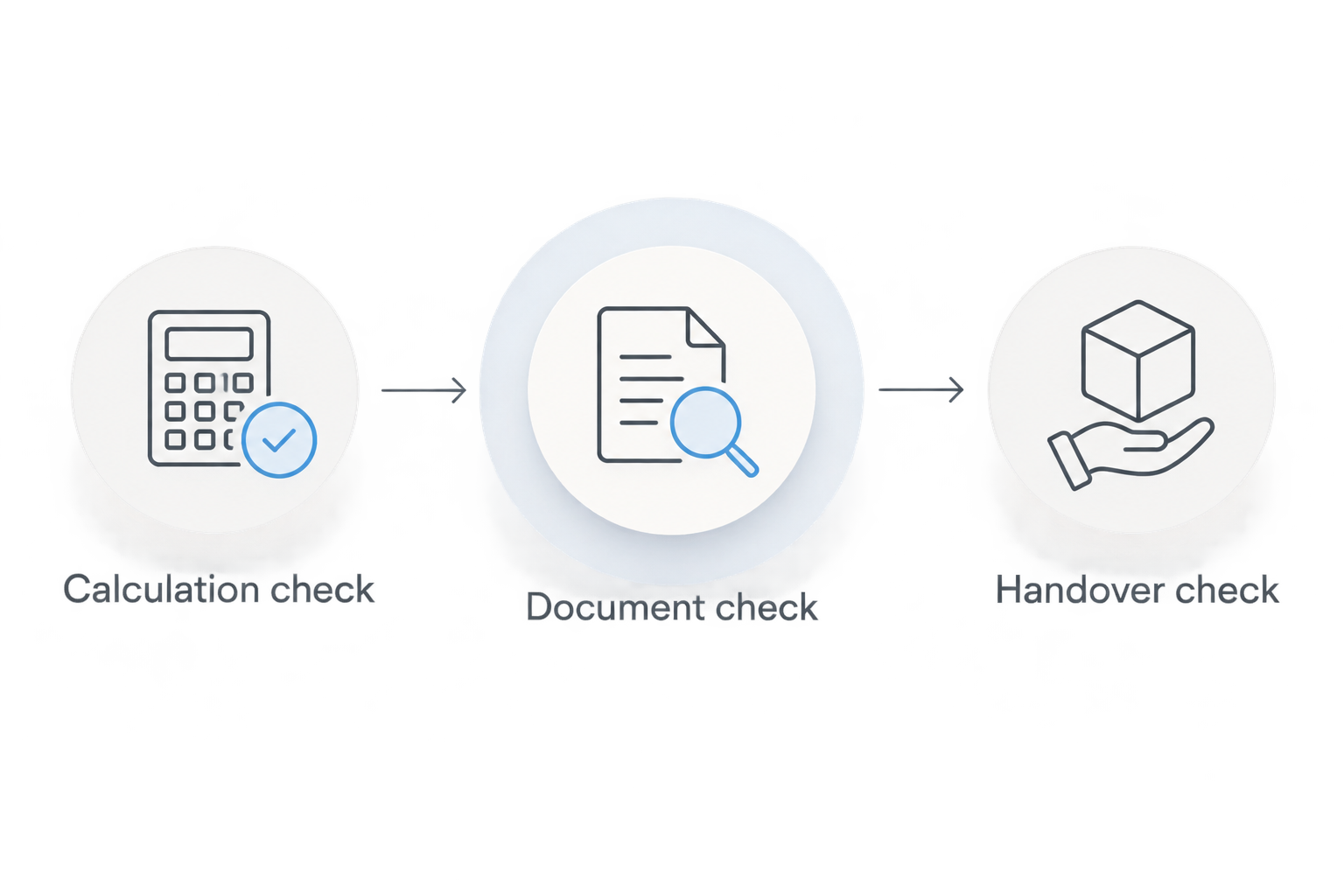
Use these three checks on a sample order before putting a template into service. They apply whether you are considering Skillspad business templates or adapting an existing file.
Calculation check
Enter a sample order with 3 product lines using different selling units. Change a quantity, apply any relevant adjustment, and check that every affected total updates correctly; keep these test entries separate from real customer records.
Document check
Export 2 copies: one short order and one that runs across a page break. Read the PDFs rather than judging only the editable file, checking that headings, totals and payment terms remain visible.
Handover check
Ask another staff member to explain the proposed order without coaching. The reader should identify the goods, selling units, currency, validity date and next action from the document itself.
Keep a clean master separate from completed orders. For your 2026 filing routine, use a consistent combination of buyer name, document reference and revision identifier so staff can locate the version actually sent.
How these layouts are ranked
The ranking prioritises calculation clarity, selling-unit clarity, document identity, buyer matching, commercial terms and revision control. A calculation-first spreadsheet takes the default position because it addresses repeated line calculations directly.
The other layouts win narrower decisions. Purchase-order matching, staged payments, split dispatches and occasional simple orders each need a different emphasis; visual styling does not outweigh a missing operational field.
Which pro forma invoice template should you choose?
Choose a calculation-first spreadsheet unless your main problem is document matching, staged payments or delivery coordination. Add the relevant fields to that foundation rather than maintaining competing versions of the same order.
When browsing Skillspad business templates, use your actual workflow as the buying checklist. Confirm the file format, editable fields and calculation behaviour before choosing; a familiar-looking preview is not enough to establish fit.
Keep 1 approved master for each genuinely different workflow. Do not create a new master merely because a different staff member prepares the document.
FAQ
What's the best pro forma invoice template for wholesalers in Ghana?
A calculation-first spreadsheet is the best default for wholesalers preparing mixed-product orders. Require clear selling units, visible line calculations, separate adjustments and explicit payment terms.
Is a pro forma invoice proof that a customer has paid?
No. A pro forma invoice describes a proposed transaction; record confirmed payments separately and issue the appropriate payment documentation.
Should I use a spreadsheet or a document template?
Choose a spreadsheet for repeated calculations and a document template for occasional, uncomplicated orders. Check the buyer-facing PDF in either case.
What should a wholesale pro forma invoice include?
Include seller and buyer details, a document reference, dates, goods descriptions, selling units, quantities, currency, proposed charges and commercial terms. Check applicable tax and cross-border requirements separately.
Can I show a deposit on a pro forma invoice?
Yes, you can state a proposed deposit requirement and its payment condition. Keep that proposal distinct from any record of money actually received.
Can I use the same layout for local and export buyers?
You can use a common starting structure, but export transactions need a separate requirements check. Confirm the necessary fields and supporting documents with the buyer and relevant customs or freight professional.
Should I send the editable file or a PDF to the buyer?
Send a checked PDF when you want to preserve the proposal's presentation, and retain the editable working file internally. Keep the exact version sent so later revisions remain distinguishable.
One last thing
Treat the selling unit as part of the product description, not a minor formatting detail. “Carton” and “piece” describe different quantities even when the product name is identical. Before sending your next pro forma, read the unit column aloud alongside the quantity column; an unclear order can still have a mathematically correct total.