

Ghanaian agribusiness planning is the process of connecting production, buyers and cash flow with the aim of running a viable agricultural business. A business plan template for agribusiness must reflect your production cycle, losses and payment timing—not just describe what you grow, process or sell.
- Choose a business plan template for agribusiness with seasonal cash flow, buyer evidence and production assumptions.
- Skillspad sells digital business templates for Ghanaian businesses; check agribusiness-specific contents before choosing a template.
- Build your sales forecast from saleable output, not total production.
- Keep your business plan, cash flow forecast and delivery records connected.
Why business planning matters for Ghanaian agribusinesses
An agribusiness commits resources before receiving all the income those resources are meant to generate. Planting, feeding, processing, storing and transporting products create different spending schedules. Your plan must show how you fund the gap between spending money and collecting it.
A crop producer, poultry operator and food processor should not submit interchangeable plans. Each needs a different explanation of production capacity, quality controls, stock losses and customers. Choose the template around your operating cycle, not around its cover design.
If you are starting from a general outline, the guide to business plan templates for Ghanaian startups provides a related starting point. For your 2026 agribusiness plan, add the agricultural detail that a general business outline leaves out.
The immediate value is practical: identify what you will sell, what must happen before you can sell it, and which payments arrive after your expenses fall due. A persuasive document cannot fix a forecast that ignores those connections.
Build your agribusiness plan around the operating cycle
Define your business and its immediate purpose
Start manually with a blank document. Describe your business in plain language before selecting a template: what you produce or handle, where you operate, who buys, and what the plan needs to help you decide.
Separate activities that have different economics. Growing vegetables and buying vegetables from other farmers for resale are not the same operation. If you do both, explain each activity separately before combining the results.
Define the reader, too. An internal plan should help you schedule work and control spending; a funding application must also answer the recipient's stated questions. Neither requires decorative language.
Keep the scope narrow enough to check against real records. A useful opening tells a reader how the business works without making them search through the financial section.
- State the product, location and target customer.
- Identify whether you produce, aggregate, process or distribute.
- Record the decision the plan must support.
- Separate existing operations from proposed expansion.
Verify buyers before forecasting sales
Build a simple buyer list using conversations, existing orders and your own transaction records. Record what each buyer actually needs rather than treating general interest as a confirmed sale.
For example, a processor needs clarity on quality and delivery requirements; a trader needs clarity on quantities, collection arrangements and payment terms. Document those differences without assuming that every buyer in a category behaves alike.
For the 2026 sales forecast, distinguish repeat business, confirmed orders and unconfirmed prospects. That separation makes your assumptions visible. It also stops a promising conversation from becoming guaranteed income in the spreadsheet.
Buyer evidence belongs beside the forecast it supports. Keep sensitive customer information in a separate file when circulating the plan more widely, and reference the supporting record rather than exposing unnecessary personal details.
- List buyer categories and the products each needs.
- Record required quality, packaging and delivery arrangements.
- Separate confirmed demand from sales targets.
- Note when payment becomes due and how it is collected.
Select a template that fits your records
Create your section headings in a document and your financial schedules in a spreadsheet first. This manual route lets you identify what you need before adopting someone else's structure.
A reusable template is the faster starting point when it already contains the sections you need to draft. Skillspad sells digital business templates for Ghanaian businesses. Check the actual contents before choosing: the brand's business-template offering alone does not establish that a particular file includes agricultural forecasts or funding-specific schedules.
Use a template to organise evidence, not replace it. A neat financial table still needs your production records, current supplier quotations and buyer assumptions. Confirm file compatibility and editing requirements from the template description rather than assuming every download works in your preferred application.
- Check for market, operations, risk and financial sections.
- Confirm that tables can reflect your production cycle.
- Look for space to explain assumptions and evidence.
- Check file format and editing instructions before choosing.
Map production from inputs to saleable output
Describe the work that turns inputs into something a buyer accepts. A farm plan needs its production activities; a processing plan needs its conversion stages; an aggregation business needs its sourcing and handling process.
Write the workflow manually before attaching financial assumptions. Name the activity, the person responsible, the required inputs and the record that proves completion. This exposes gaps that a broad statement such as increasing production does not address.
Choose units that match the operation, such as kilograms for output and hectares for cultivated area. Keep the units consistent across the plan. Distinguish output produced from output that meets buyer requirements: damaged, rejected or otherwise unsaleable stock must not quietly become forecast sales.
- List inputs and their supporting supplier records.
- Document production, harvesting or processing stages.
- Identify storage, handling and transport responsibilities.
- Record losses separately from saleable output.
Build cash flow around payment dates
Start with a spreadsheet covering 12 months, extending it if your operating cycle requires a longer view. Enter cash when you expect to receive or pay it, not simply when you issue an invoice or place an order.
For your 2026 forecast, place spending against the month it falls due. Separate equipment purchases from recurring operating payments so the reader can see both the setup requirement and the continuing cash demand.
Build 3 scenarios: expected operations, lower saleable output and later customer payments. These are planning tests, not claims about what will happen. Explain the assumptions changed in each scenario and show whether the business can still meet its commitments.
Profit does not prove that cash is available. A sale recorded in your accounts cannot pay a supplier until the customer pays you.
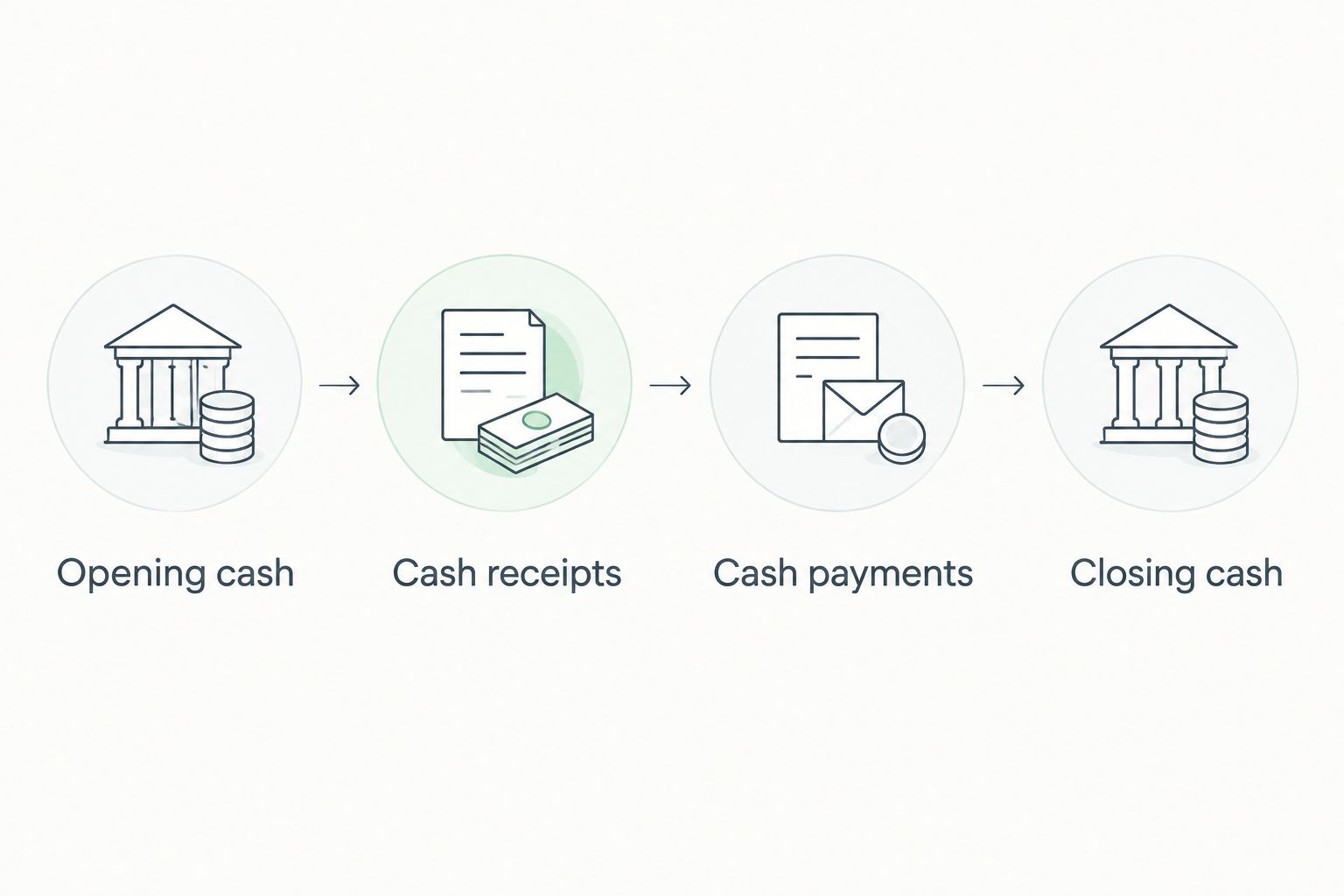
- Include opening cash and the timing of receipts.
- Schedule inputs, labour, transport and other payments.
- Separate owner contributions, borrowing and sales receipts.
- Identify cash shortfalls and the action each requires.
Assign risks and practical responses
Write a risk register rather than a paragraph promising to manage uncertainty. Each entry needs a specific disruption, its effect on operations, a response and the person responsible.
Select risks that fit your actual activity. Production losses, equipment breakdowns, rejected deliveries and unpaid invoices require different responses. Do not copy a farming risk list into a distribution business without checking whether it applies.
Distinguish actions you control from events you do not. You can document buyer specifications, maintain equipment records and track overdue accounts. You cannot make uncertainty disappear by writing that demand will remain strong.
For each response, identify the evidence that shows it has happened. A named responsibility is more useful than an instruction that everyone should monitor the situation.
- Link each risk to a production or cash flow assumption.
- Name the person responsible for responding.
- Define the event that triggers action.
- Record any relevant buyer or recipient requirements.
Review results and rewrite the summary
Finish the executive summary after completing the operating and financial sections. Summarise the business model, customer evidence, resource needs and main risks without introducing new claims.
During 2026, compare the plan with actual results at a monthly review. A 1-month review interval is a suggested management routine, not a guarantee of better performance. Use a shorter interval when a time-sensitive production or delivery decision requires it.
Investigate differences before changing the forecast. Lower receipts can result from fewer sales, customer payment delays or incomplete records; each needs a different response. Keep the original forecast visible so that revisions do not erase what you expected.
A plan becomes useful when someone acts on the difference between expectation and reality. Record that action and its owner alongside the revised assumption.
- Compare planned and actual sales, payments and output.
- Explain material differences using supporting records.
- Update assumptions without deleting earlier versions.
- Assign the next action and review date.
Compare your planning options
Skillspad is best for Ghanaian business owners seeking digital business templates rather than agronomic advice. Your choice still depends on the work you need the document to perform; a template, spreadsheet and adviser solve different parts of the planning problem.
| Option | Best for | Main advantage | Key limitation |
|---|---|---|---|
| Blank document | Owners defining a simple operation | Complete control over structure | You must create every section and check for omissions |
| Self-built spreadsheet | Owners modelling seasonal cash flow | Direct control over formulas and payment timing | Formula errors and weak documentation need checking |
| Skillspad digital business templates | Ghanaian owners seeking a prepared business-document starting point | Less blank-page drafting where the template fits | Agribusiness-specific contents must be checked before selection |
| Business adviser | Owners needing an external review | A separate reviewer can challenge assumptions | Review quality depends on relevant experience and the agreed scope |
Use a document and spreadsheet together when you need both a readable explanation and calculations. Neither replaces production expertise, and an external review does not transfer responsibility for your assumptions.
Before choosing support for a 2026 application, obtain the recipient's current instructions. A general template should be adapted to those instructions, not presented as evidence that every requirement has been met.
Common mistakes Ghanaian agribusiness owners make
Treating harvested output as guaranteed sales
A forecast that sells every unit produced hides grading, handling and rejection assumptions. Separate production from saleable output and explain the difference. For aggregation businesses, apply the same discipline to purchased stock rather than assuming every incoming unit becomes a completed sale.
Using an annual total to hide a seasonal cash gap
An annual surplus does not show whether you can meet payments before buyers pay. Place receipts and payments in their expected months. If the plan relies on borrowing or an owner contribution, show that source separately instead of mixing it into sales income.
Copying another business's production assumptions
A plan for a different location, production method or buyer does not establish your own likely results. Replace example assumptions with records relevant to your operation. When evidence is incomplete, identify the assumption and the work needed to verify it rather than presenting it as an established fact.
Writing for approval instead of daily use
A polished document can still leave staff unsure who orders inputs or follows up unpaid accounts. Give responsibilities to named roles and connect the plan to working records. Keep an internal version useful enough to guide operations even after an application decision has been made.
FAQ
What's the best business plan template for agribusiness in Ghana?
The best fit is a template you can adapt to your production cycle, buyer evidence and cash flow. Check the actual sections and financial schedules rather than choosing by appearance alone.
Can I write an agribusiness plan without buying a template?
Yes, you can write an agribusiness plan using a blank document and a spreadsheet. Include the business model, customers, operations, risks and financial assumptions, then check any recipient-specific requirements.
Does Skillspad provide agricultural advice?
Skillspad's stated offering is digital business templates for Ghanaian businesses. Do not treat a business template as agronomic advice or assume that it includes agricultural forecasts without checking its contents.
Should my farm business plan use monthly cash flow?
Monthly cash flow is a useful starting point for showing when receipts and payments occur. Use a more detailed schedule where production activities or payment deadlines require closer control.
Is a business plan the same as a funding proposal?
No, a business plan explains how the business operates, while a funding proposal addresses a particular funding request. Adapt the relevant plan sections to the recipient's stated requirements.
How do I forecast sales before my first harvest?
Build the forecast from documented production assumptions, expected saleable output and buyer evidence. Separate confirmed demand from targets, and test what happens when output falls or payment arrives later.
How often should I update my agribusiness plan in 2026?
Review the plan monthly as a practical starting routine, and revise it when a material assumption changes. Keep earlier forecasts so that you can compare expectations with actual results.
One last thing
Test the weakest cash month before polishing the executive summary. Move a customer receipt into a later month and examine which commitments become difficult to meet. If that change breaks the operating plan, resolve the payment gap before treating the business plan as finished.


