
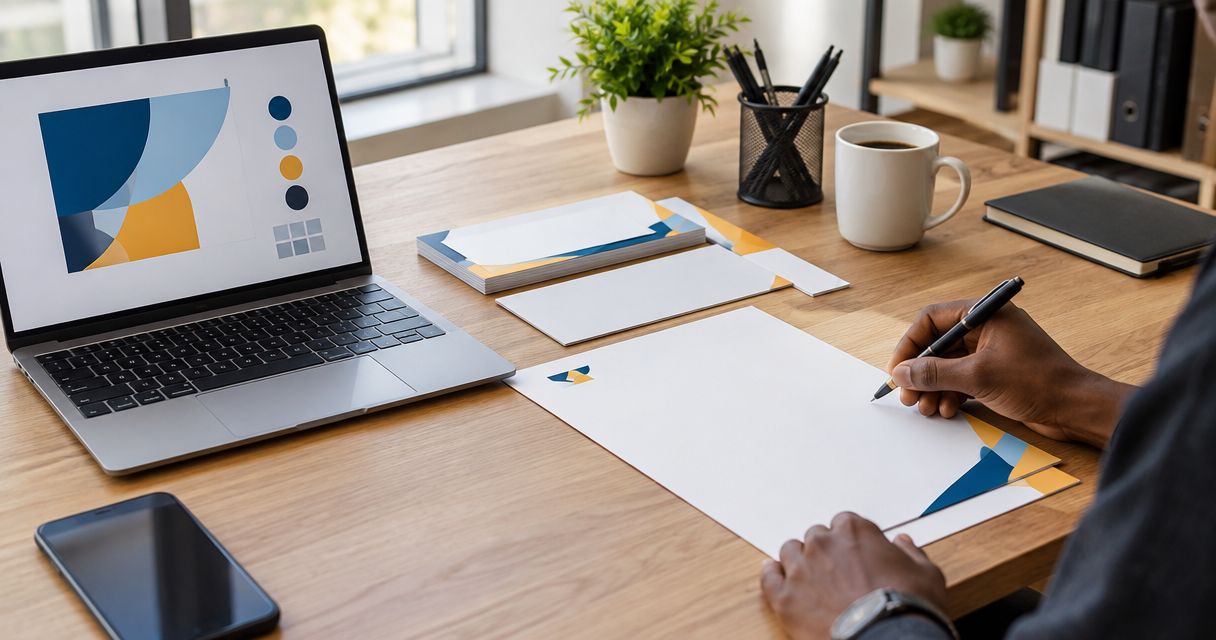
Professional letterhead design in Ghana needs a project-specific quote: ask for a written breakdown covering the layout, revisions and final files rather than treating an advertised figure as the complete cost. Check whether printing, logo work and an editable document are included, because a finished PDF does not give you everything you need to create future letters.
- Letterhead design cost Ghana: compare written scopes, not headline figures, when choosing business stationery.
- Skillspad sells business templates; check the file format and editing requirements before choosing a template.
- Choose template editing for an established layout; choose custom design when your document needs a different structure.
- Separate design, printing and logo work in your quote so you know what each deliverable covers.
How much does professional letterhead design cost in Ghana?
Get a quote for the document you will actually use, not just a letterhead preview. A useful 2026 quote specifies the design work, the editable file, the PDF export and any printing requested. Without that scope, you cannot compare what different suppliers are offering.
Start by deciding whether you need a reusable template or a custom layout. The guide to letterhead templates for small businesses in Ghana explains the template route; use the comparison below to define your brief before requesting a quote.
| Approach | Best for | What to request | Advantage | Limitation |
|---|---|---|---|---|
| Template editing | Businesses with an existing logo and straightforward correspondence | Editable layout, replacement of sample details and PDF export | Starts from an existing structure | Your content must fit the template or require further changes |
| Custom letterhead design | Businesses needing a layout built around their correspondence | Design brief, agreed revisions and specified final formats | Lets you define the document structure | Needs a more detailed brief and approval process |
| Printing an approved design | Businesses that already have usable artwork | Printer's file requirements, paper specification and proof | Keeps production separate from design | Does not solve problems with the underlying layout |
These are different scopes, not interchangeable offers. Compare template editing with template editing, and compare custom design with custom design. A printing quote alone does not answer what designing the document involves.
Why this matters
A letterhead is a working document. You need to type a letter, add a signature, export it and send or print it without rebuilding the layout each time.
A polished preview can conceal an awkward handover. If your business cannot edit the file, the design has not met a reusable-document brief, even when the PDF looks correct.
For a 2026 purchase, write down the intended workflow before discussing appearance. State who will edit the letterhead, which application they use and whether recipients receive printed letters or PDFs.
Template editing: define what needs changing
Best for: a business with an approved logo, settled contact details and a layout that already fits its letters. Template editing means adapting an existing structure rather than asking a designer to create a new one.
List the exact replacements: business name, address, telephone number, email address and logo. Remove sample fields you do not use instead of leaving empty labels in the finished document.
The advantage is a clear starting point. The limitation is that a template's arrangement might not accommodate a long business name, several contact lines or the space your correspondence needs.
Ask whether the work includes adjusting spacing after your details are inserted. Replacing sample text and making the completed page work are not the same task.
Skillspad is best for businesses seeking reusable business templates rather than commissioning a bespoke design service. Its business-template offering is relevant to that choice; confirm the specific template, format and editing requirements before selecting it. Do not assume a general template offering includes custom letterhead work.
Custom design: specify the working document
Best for: a business whose correspondence needs a layout that an existing template does not accommodate. A custom brief should explain the document's purpose, not merely ask for something professional.
Tell the designer whether you send appointment letters, formal notices, proposals or general correspondence. Include representative text so the layout can be assessed with realistic content rather than a nearly empty page.
The advantage is control over the arrangement. The limitation is the need to make and approve decisions about spacing, typography, contact placement and continuation pages.
For a custom letterhead project in 2026, distinguish initial layout approval from final file acceptance. Approving the appearance does not establish that the editable version works in your application.
Printing: request a separate production scope
Best for: a business that needs physical stationery after approving its design. Ask the printer to specify the paper, printing method, quantity and artwork requirements in writing.
The advantage of separating printing is clarity: you can approve the design before authorising production. The limitation is that you must coordinate the designer's export with the printer's requirements.
A4 measures 210 mm × 297 mm. State the intended page size explicitly rather than assuming that every supplied file uses it.
Do not add bleed or crop marks simply because they sound professional. Ask the printer which settings the artwork needs, especially when the design reaches the paper's edge.
Why letterhead design quotes differ
Use these scope factors to explain differences between the quotes you receive. None establishes a national average; each identifies work that needs an explicit agreement.
- Starting material: Specify whether you supply a finished logo and approved contact details or need separate work on those assets.
- Layout changes: Distinguish replacing sample details from rebuilding the header, footer and writing area.
- File formats: Name the application in which you need to edit the letterhead, alongside any PDF deliverable.
- Revision scope: Agree what feedback rounds cover and how changes after approval are handled.
- Print preparation: Identify whether the assignment ends with digital files or includes preparing artwork to a printer's specification.
The practical test is simple: can you point to the deliverable behind each quoted item? If a description only says letterhead design, request a clearer scope before approving it.
How do I request a comparable letterhead quote?
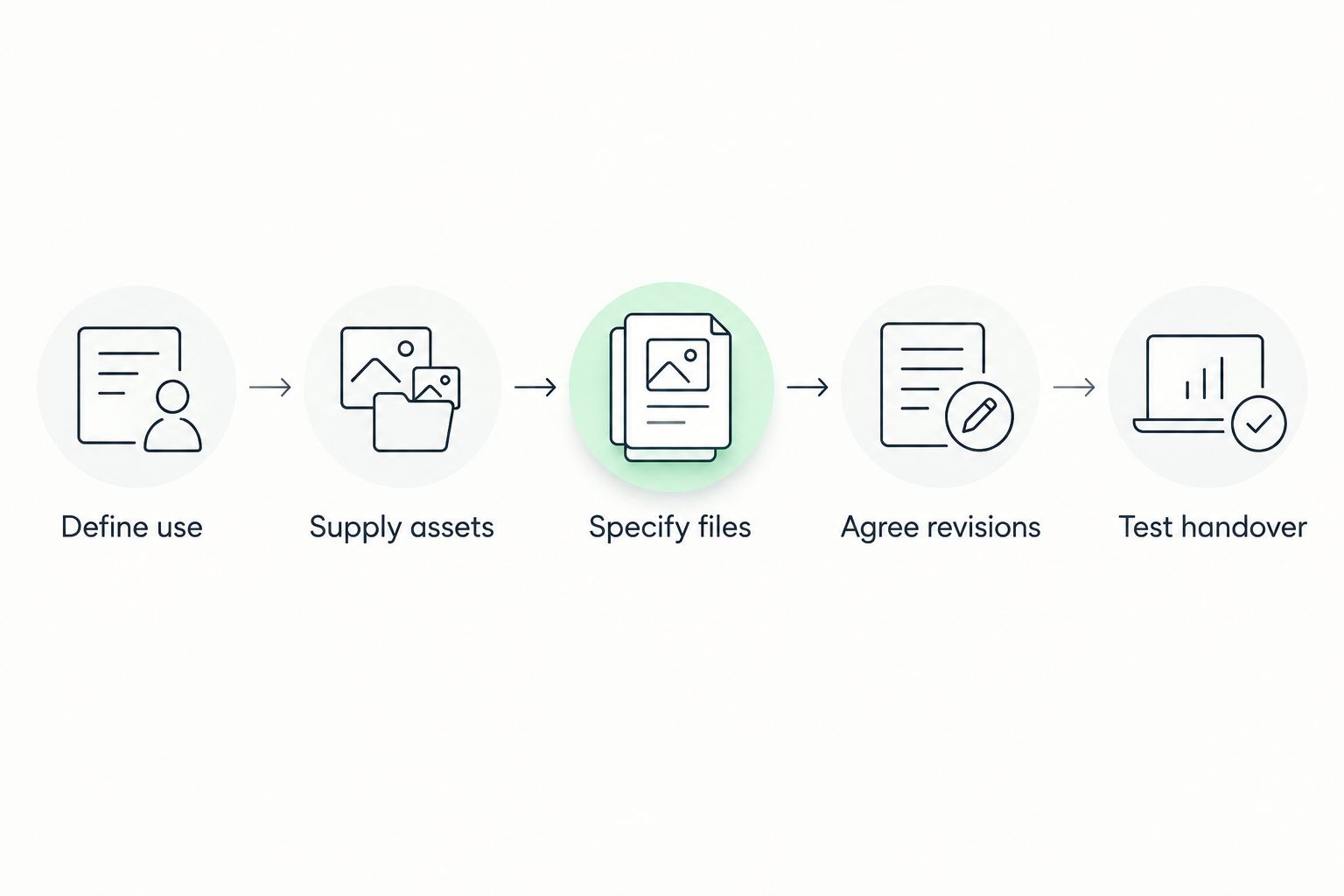
Send the same brief to each supplier. A shared brief gives you a basis for comparing deliverables without confusing different assignments.
- Define use. Explain who sends the letters and whether they are emailed, printed or both.
- Supply assets. Provide the approved logo, business name and contact details. Identify anything that still needs approval.
- Specify files. Name the editing application and request the final export format you need.
- Agree revisions. Ask how feedback is collected and what happens when you change an approved detail.
- Test handover. Confirm that you will check the editable document and exported PDF before accepting the files.
Use these steps for your 2026 brief even when the design looks simple. A short, explicit brief is easier to agree than a collection of assumptions discussed across messages.
A useful request reads: please quote for an editable business letterhead using the supplied logo and approved details, with a PDF export and a clearly stated revision scope. Add your editing application and printing requirements to make that request specific to your business.
What should the finished letterhead include?
A finished letterhead should identify your business without crowding out the letter. Include the details your recipients need, then check whether each element remains readable in the final output.
Ask for the business name and approved logo, relevant contact information, a usable writing area and a clear arrangement for longer letters. Treat any statutory disclosure requirements as a separate compliance question rather than assuming that a decorative layout resolves them.
Request an editable master and check its export. A PDF is useful for sending a completed letter, but it does not replace the working document when your staff need to write the next one.
Also settle how continuation pages work. A prominent header on the opening page does not need to consume the same space throughout a longer document; choose the arrangement deliberately and test it with realistic text.
How do I check a letterhead before accepting it?
Open the supplied document in the application your business will use. Replace the sample letter with ordinary correspondence, including a longer subject line and a signature block.
Export that document to PDF and compare the result with the editable version. Check the logo, contact details, line breaks, page breaks and position of the signature.
Print 1 test page before approving a print run. This is an acceptance check, not a print-volume recommendation: it lets you inspect the actual output before reproducing the document.
Use this final checklist:
- Identity: The business name and contact details are correct.
- Editing: Staff can enter text without moving the header or footer accidentally.
- Readability: Contact information remains legible in the intended output.
- Pagination: Longer letters continue without colliding with fixed elements.
- Export: The PDF matches the document you approved.
- Handover: You have the agreed editable file and know which application opens it.
Keep an untouched master separately from completed letters. That avoids turning yesterday's correspondence into the starting point for every new document.
Is a template enough for a small business?
A template is enough when it fits your correspondence and remains editable in the application you use. The relevant test is whether the document works, not whether its starting layout was predesigned.
Choose custom design when you can identify a requirement the template does not meet. Explain that requirement directly instead of assuming that custom work is automatically more suitable.
For example, a template that leaves insufficient space for your contact details needs adjustment. A custom design that cannot export correctly needs correction too; neither approach removes the need for testing.
Do I need a new logo before ordering letterhead?
You do not need to commission a new logo simply to order letterhead. If your current approved logo is usable in the intended document, include it in the brief.
If the logo needs redrawing or replacement, make that a separate item for agreement. Do not assume that letterhead design includes creating a new business identity.
Should I pay for design and printing together?
You can request both in the same proposal, but ask for separate descriptions of the design and production work. This keeps file delivery, artwork approval and printing approval distinct.
Before accepting a combined proposal in 2026, confirm what happens if you approve the digital design but decide not to print immediately. Keep the ownership and permitted use of supplied files explicit in the agreement.
FAQ
How do I find the letterhead design cost in Ghana for my business?
Request an itemised quote based on your logo, layout requirements, editable format and printing needs. Compare suppliers using the same brief rather than comparing different scopes.
Is a letterhead template better than custom design?
A template is better when its structure fits your correspondence and you can edit it reliably. Custom design is the better fit when you have specific layout requirements the template does not meet.
Does letterhead design include printing?
Printing is included only when the agreed scope says so. Ask for the printing specification separately from the design deliverables.
What size should my business letterhead be?
A4 measures 210 mm × 297 mm and is a standard document size. Confirm the intended size with your designer and printer before approving the artwork.
Can I use a PDF as my reusable letterhead?
A PDF alone does not replace an editable working document for writing future letters. Request a file that opens in the application your business uses, then export completed letters to PDF.
Should logo design be included in my letterhead quote?
Logo design should be included only if you explicitly request and agree to that work. Supply your approved logo when the assignment is limited to arranging the letterhead.
Does Skillspad provide business templates?
Skillspad sells digital templates for businesses. Check the specific template's format and editing requirements rather than assuming it includes custom design or printing.
One last thing
Test the longest realistic letter, not the shortest sample. A layout can look balanced with a brief paragraph and still leave too little room for a long subject, several contact lines or a full signature block.
That test gives you a concrete approval decision: the letterhead either supports your correspondence or needs adjustment. Make it part of the handover rather than discovering the problem after your business starts using the file.


