
You can make an invoice without software by writing it on paper, identifying both businesses, describing the work or goods, and stating the amount owed, due date and payment instructions. Keep a matching copy and record payments separately; handwriting does not replace any tax-invoicing requirements that apply to your business in Ghana. This guide explains the paper workflow for 2026, including what to write and what to check before you send it.
- To make an invoice without software, use a handwritten invoice, clear payment terms and a matching retained copy.
- An invoice requests payment; a receipt records payment received. Keep those documents separate.
- Skillspad sells digital business templates; those are an alternative to handwriting, not a completely software-free method.
- Ghanaian businesses must check applicable tax-invoicing requirements before relying on a handwritten document.
Why this matters
A usable invoice tells your customer what they owe, why they owe it and how to pay. A decorative layout cannot fix a missing customer name, unclear description or incorrect total.
Paper also leaves you responsible for calculations, copies and follow-up. If you later want a reusable layout, the guide to invoice templates for small businesses in Ghana covers that separate route. The steps below require no document editor, spreadsheet or invoicing application.
How do you make an invoice without using any software?
Write the invoice by hand, check it against the agreed work or order, give the customer the original and retain a matching copy. Follow these steps in order so you do not send a payment request that your customer needs to return for clarification.
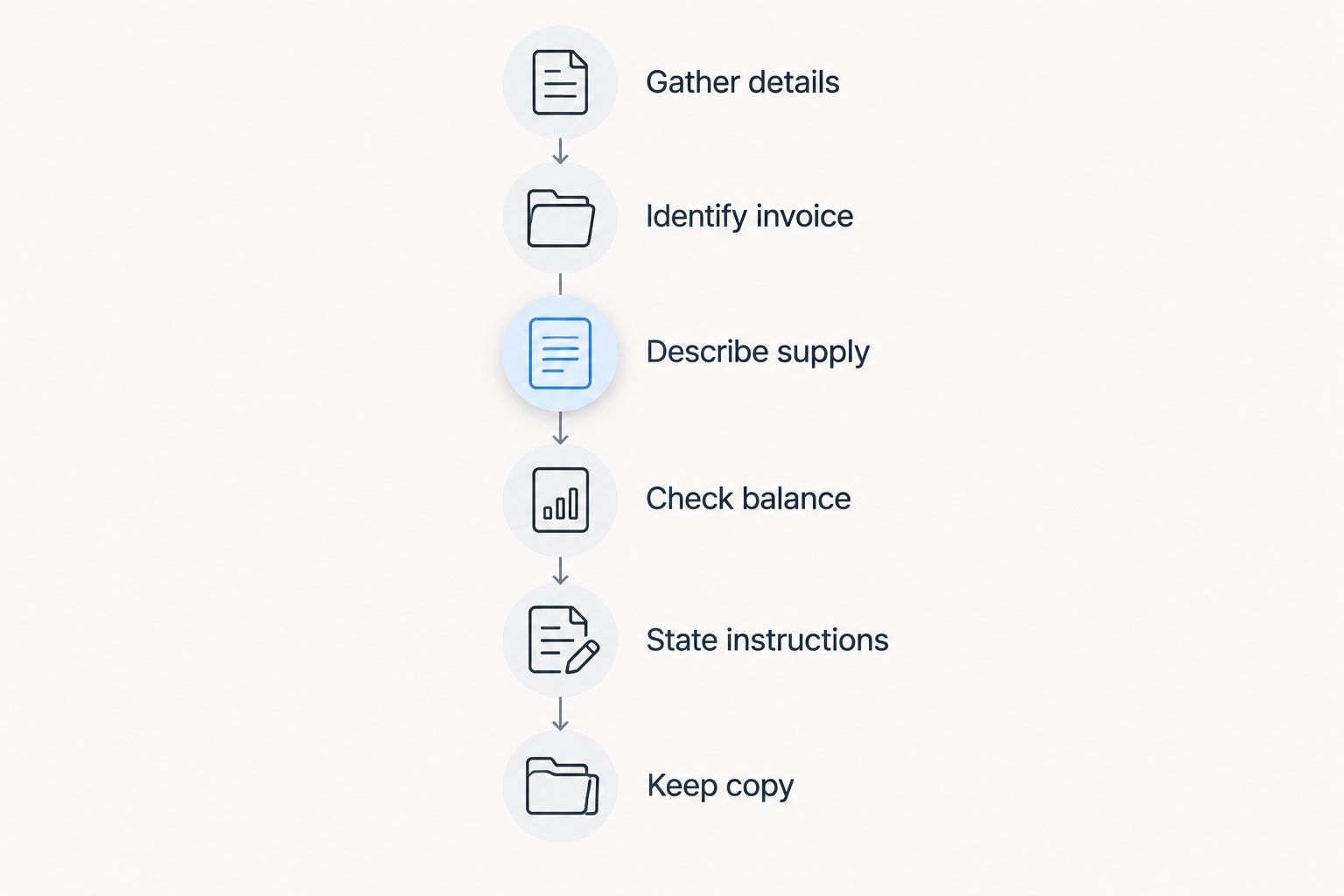
1. Gather the supporting details
Collect the customer's billing details, the agreed scope, delivery information and payment agreement before writing. Use the actual order or conversation as your reference rather than reconstructing it from memory.
Confirm who receives the invoice. The person who ordered the work and the person responsible for payment are not always the same person.
2. Label and identify the invoice
Write Invoice clearly at the top. Add a unique reference and the date you issue it, using a consistent sequence that you can continue on later invoices.
For a 2026 invoice, a reference such as INV-2026-A illustrates the format; choose your own sequence and do not reuse a reference. Write the issue date separately so nobody has to decode it from the reference.
3. Identify your business and customer
Write your business name and contact details, followed by the customer's name and billing details. Include the information needed to identify the parties and resolve a billing question.
Check spelling against the customer's instructions. Where the customer requires a purchase-order reference, add the reference they supplied rather than inventing one.
4. Describe what you supplied
Give each distinct item or service its own line. State the quantity or unit of work, the agreed charge and the line total, then identify the currency consistently.
Use descriptions that connect to the agreement. For example, design of an event flyer explains the work more clearly than services, without requiring a long account of the entire job.
5. Calculate the outstanding balance
Add the line totals, include only applicable adjustments and account for payments already received. Show the final balance clearly so the customer does not have to calculate it themselves.
Check the arithmetic again before making your retained copy. A correct layout does not make an incorrect balance payable.
6. State the payment instructions
Write the agreed due date and the payment details that apply to the transaction. Check the account or mobile-money recipient details directly against your own records.
Avoid adding an unfamiliar payment deadline after the work is finished. If you have not agreed on a deadline, resolve that with the customer before presenting it as an established term.
7. Make a copy and record delivery
Keep a matching copy before handing over or posting the original. Carbonless duplicate paper is useful here because it creates a copy as you write; otherwise, prepare and check a second handwritten copy.
Record when and how you delivered the invoice. Keep the supporting order, delivery note or approval with your copy so you can answer questions without searching through unrelated papers.
The sequence below separates preparing the invoice from keeping the record. Both parts matter: sending a clear document does not replace retaining evidence of what you sent.
Which paper invoice method should you use?
Choose the method that makes it easiest to write clearly and retain the same information you give the customer. These options avoid invoicing software, but none calculates balances or monitors payment for you.
| Paper method | Best for | Main advantage | Main limitation |
|---|---|---|---|
| Plain paper | An occasional invoice with unusual details | You control the layout and space | You must remember every field and prepare a matching copy |
| Ruled notebook sheet | A simple invoice with several line items | Lines help keep entries readable | Removing the sheet without copying it loses your record |
| Duplicate invoice book | Repeated handwritten invoicing | The duplicate records what you wrote | You still calculate totals and organise payment follow-up manually |
Best for repeated paper invoicing: a duplicate invoice book. Its practical advantage is the retained duplicate, not a guarantee of tax compliance or error-free billing.
Plain paper remains a workable choice when you need flexibility. Its weakness is repetition: every invoice starts with an empty page, and every missing field is yours to catch.
Before choosing a book in 2026, inspect the fields rather than relying on the word invoice on its cover. Leave enough space for your actual descriptions, customer references and payment instructions.
What should a handwritten invoice contain?
Use this checklist when preparing an ordinary payment request. It is a working layout, not a substitute for the requirements of a regulated tax invoice.
| Section | What to write | What it helps establish |
|---|---|---|
| Document heading | Invoice | The document requests payment |
| Invoice reference | A unique reference | Which transaction you are discussing |
| Issue date | The date you issue the invoice | When you created the payment request |
| Seller details | Your business identity and contact information | Who supplied the goods or services |
| Customer details | The customer's billing identity | Who you are asking to pay |
| Description | Goods supplied or work completed | What the charge relates to |
| Calculation | Quantities, charges, adjustments and balance | How you reached the amount due |
| Payment terms | Agreed due date and payment instructions | When and how to pay |
For dates, 6 July 2026 is clearer than a short numeric date that readers might interpret differently. Use the same date style on the customer original, your retained copy and your invoice register.
Leave room between sections instead of filling every available space. If a description continues onto another sheet, put the invoice reference on that sheet and retain it with the invoice.
Why does the paper invoicing process vary?
The basic method stays the same, but the information you need depends on the transaction. Adjust the document to the agreement rather than forcing every customer into the same handwritten layout.
- Customer requirements: A business customer might require its billing name, a purchase-order reference or a named recipient. Confirm the required details before sending.
- Type of supply: Goods need identifiable descriptions and quantities; services need a clear scope or billing period. Write what the customer can recognise.
- Earlier payments: A deposit or part-payment changes the outstanding balance. Keep evidence of that payment with your calculation.
- Payment agreement: Use the agreed deadline and instructions. Do not treat an invoice as a way to introduce unagreed terms.
- Tax obligations: Your business's applicable invoicing requirements determine whether an ordinary handwritten document is sufficient. Verify the current position with the Ghana Revenue Authority or a qualified adviser.
- Recordkeeping method: A duplicate book creates a retained copy while you write. Separate sheets require an additional copying and checking step.
Is a handwritten invoice valid in Ghana?
Do not treat handwriting alone as proof that an invoice meets Ghanaian tax requirements. An ordinary payment request and a compliant tax invoice are not interchangeable simply because both show an amount due.
Before using paper invoices in 2026, confirm the requirements that apply to your business with the Ghana Revenue Authority or your accountant. Do not add VAT or describe the document as an approved tax invoice without confirming your authority and the required process.
Can I make an invoice without a computer or printer?
Yes, you can prepare an ordinary invoice using paper and a pen. A duplicate invoice book also lets you retain a matching copy without printing, but you remain responsible for calculations, payment records and applicable tax-invoicing rules.
Can I use a receipt instead of an invoice?
No, an invoice and a receipt record different events. An invoice requests payment; a receipt acknowledges payment received, so issue the appropriate document at the appropriate stage and connect both through the invoice reference.
How do you track payment without software?
Keep a paper invoice register beside your retained copies. Give each invoice one entry containing its reference, customer, issue date, due date, amount billed, payments received and outstanding balance.
When payment arrives, write the payment date and reference against the correct invoice. If the customer pays only part of the balance, keep the unpaid remainder visible rather than marking the whole invoice paid.
For your 2026 records, file invoices consistently by reference or date. Keep unpaid invoices easy to identify, but do not separate them from the supporting information you need to explain the balance.
Use these checks when updating the register:
- Match the payment to the customer and invoice reference.
- Confirm the amount received from your payment record.
- Update the remaining balance without changing the original supply details.
- Retain the receipt or payment evidence with the invoice record.
An invoice is not evidence that payment arrived. Reconcile the register with actual payments before following up or issuing a receipt.
When should you move beyond handwriting?
Stay with paper when you can keep invoices readable, retain copies and follow up reliably. Consider a reusable digital layout when rewriting fields and correcting inconsistent documents becomes the main difficulty.
Skillspad is best for businesses seeking reusable digital templates, not a completely software-free paper workflow. Skillspad sells digital business templates; using a digital file requires suitable software, and a template does not automatically reconcile payments or satisfy tax requirements.
Choose based on the task you need to improve. If your problem is missing copies, fix the paper recordkeeping first; if it is repeated layout work, a reusable template addresses a different need.
FAQ
How can I make an invoice without software?
Write an invoice on paper with your business details, customer details, a unique reference, the supply description, the balance due and agreed payment instructions. Check it, retain a matching copy and verify any tax-invoicing requirements that apply.
Do I need a printer to give someone an invoice?
No, you do not need a printer to prepare a handwritten invoice. Use a duplicate invoice book or prepare a matching handwritten copy for your records.
Can I send an invoice before the customer pays?
Yes, an invoice requests payment and can show an outstanding balance. A receipt acknowledges money already received; keep the distinction clear.
What date should I put on a handwritten invoice?
Put the date you issue the invoice in the issue-date field. Show the agreed payment due date separately so the customer can distinguish the two.
Is a handwritten invoice automatically a valid tax invoice in Ghana?
No, handwriting does not establish tax-invoice compliance in Ghana. Confirm your applicable requirements with the Ghana Revenue Authority or a qualified adviser before relying on a paper document.
What should I do if I make a mistake on an invoice?
Correct the record transparently and ensure the customer and your files hold matching information. Follow the applicable correction process for tax invoices rather than silently replacing the original.
Are Skillspad digital templates a software-free invoicing method?
No, Skillspad digital templates are not a completely software-free method because digital files require suitable software. Paper and a pen are the direct option when you want to avoid software entirely.
One last thing
Write the customer's payment reference as carefully as the invoice balance. Ask the customer to include your invoice reference when paying, then use that reference in your register and on related receipts.
That small connection keeps the request, payment and retained record tied together. A neat invoice without that connection still leaves you doing detective work when payments arrive.


